

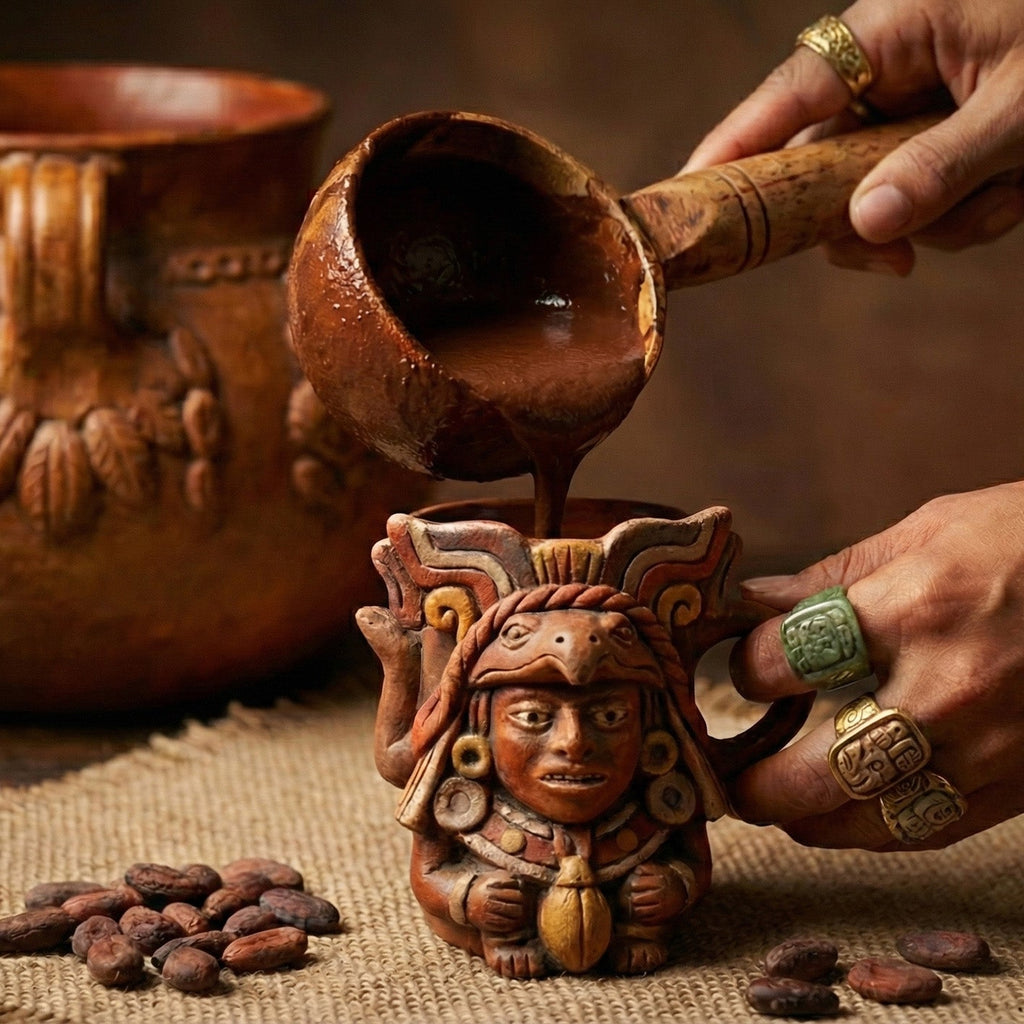
Ceremonial Cacao and the Ancient Wisdom Rising
How cacao became food for gods, currency for empires, and a bridge between worlds
Long before cacao was sweetened, powdered, or packaged, it was dangerous, powerful, and alive with meaning.
In ancient Mesoamerica, cacao was never “just a drink.” It was worn around the necks of sacrificial victims. It was offered to the gods in caves and cenotes. It was painted on temples, carved into stone, written into codices, and woven into creation myths. It was believed to carry souls between worlds.
To understand ceremonial cacao is to step into a worldview where food, spirit, blood, fertility, death, and rebirth were inseparable.
This is where the story truly begins.

Cacao Before Chocolate
The word Theobroma cacao — “food of the gods” — was given to cacao by European scientists in the 18th century.
But the name was already ancient in spirit.
Archaeological evidence shows cacao was being consumed in Mesoamerica over 3,500 years ago, long before Europeans ever tasted it. Chemical residue found in ancient vessels confirms cacao drinks were prepared as early as 1500 BCE.
But what mattered was not only that cacao was consumed — it was how and why.
Cacao belonged to the sacred realm first. Pleasure came later.
The Cacao Tree as a World Tree
In Mesoamerican cosmology, the universe was structured vertically:
-
the Underworld below
-
the human world in the middle
-
the heavens above
Connecting these realms was the World Tree, the axis mundi.

In many cacao-growing regions, the cacao tree itself became that World Tree.
Art and carvings show cacao trees emerging from split mountains, caves, and the open jaws of serpents — portals to the Underworld. From their branches perch birds representing the heavens. From their trunks sprout cacao pods shaped like hearts.
The message was clear:
cacao connected worlds.
Humans offered cacao to gods not as tribute, but as a language — a way to speak across realms.
Cacao and Creation
According to the Popol Vuh, the Maya book of creation, the gods failed multiple times to create humans. Beings made of mud collapsed. Beings made of wood lacked souls.
Only when the gods gathered the sacred foods hidden inside the Mountain of Sustenance did creation succeed.
Among those foods was cacao.
Some interpretations suggest cacao was not just nourishment for humans — it was part of what humans were made from. Flesh shaped from maize. Vital essence infused with cacao.
To drink cacao, then, was to drink something kin to your own origin.
Cacao Deities and the Goddess of Abundance

Cacao was not abstract. It was personified.
Archaeologists have uncovered ceramic figures of a Cacao Woman, her body covered in cacao pods growing directly from her skin. She appears alive, powerful, adorned, sometimes carrying vessels — possibly for chocolate.
There are also figures interpreted as young cacao gods and old cacao gods, male counterparts sprouting cacao pods from their limbs, navels, and torsos. In some imagery, cacao emerges from the navel — the symbolic center of the universe.
These were not decorative motifs.
They were statements of power, fertility, and lineage.
Cacao as Blood, Heart, and Sacrifice
This is where modern sensibilities often flinch — but ancient truth rarely asks permission.
The cacao pod closely resembles the human heart. Both contain precious liquid. Both were considered life vessels.
In ballgame rituals, cacao pods appear alongside sacrificial knives. In stone carvings, ballplayers offer cacao pods upward to gods in scenes clearly linked to decapitation and death.
Some scholars believe cacao pods symbolically replaced human hearts in certain rituals. Others suggest cacao and blood were interchangeable offerings — both essential to cosmic balance.
Spanish chroniclers noted that cacao drinks were sometimes colored red with achiote. To them, this looked disturbingly like blood.
To the Maya and Aztecs, it was continuity.
Life fed life.
Cacao in Caves, Cenotes, and the Underworld
Caves were considered mouths of the earth — places where gods listened.
To this day, Maya communities in Belize and Guatemala bring cacao offerings into caves before planting crops. Chocolate is left so the gods can smell it. Only after days is it removed and buried.
Ancient censers discovered in caves are decorated with cacao pods. Some include five cacao beans placed inside, representing internal organs.
Cacao was not only consumed.
It was fed to the world.

Cacao as Currency and Power
Cacao was also wealth.
Beans functioned as currency across vast trade networks. Entire regions were conquered to secure cacao groves. Merchants formed powerful classes protected by patron gods.
Counterfeit cacao beans existed — hollowed shells filled with dirt.
Cacao built empires.
Yet even at its most economic, cacao never lost its sacred charge. It remained tied to rulership, ancestry, and divine legitimacy. Maya kings were depicted emerging from cacao trees to prove their right to rule.
Power flowed through cacao.
Why This Wisdom Is Rising Again
Modern cacao ceremonies often emphasize heart-opening, connection, and emotional warmth — and they are not wrong.
But something deeper is being remembered.
Cacao is returning not as a trend, but as a carrier of memory.
A substance that once held together cosmology, ecology, ritual, and daily life.
In a fragmented world, cacao reminds us that nourishment can be sacred, that food can speak, and that the heart has always been a site of intelligence.
Ceremonial cacao does not ask to be romanticized.
It asks to be respected.
It comes from a lineage where trees were gods, drinks were prayers, and the boundary between worlds was thin enough to sip.
When cacao enters modern life again, it brings with it that ancient instruction:
Balance the cosmos.
Feed the heart.
Remember where you come from.
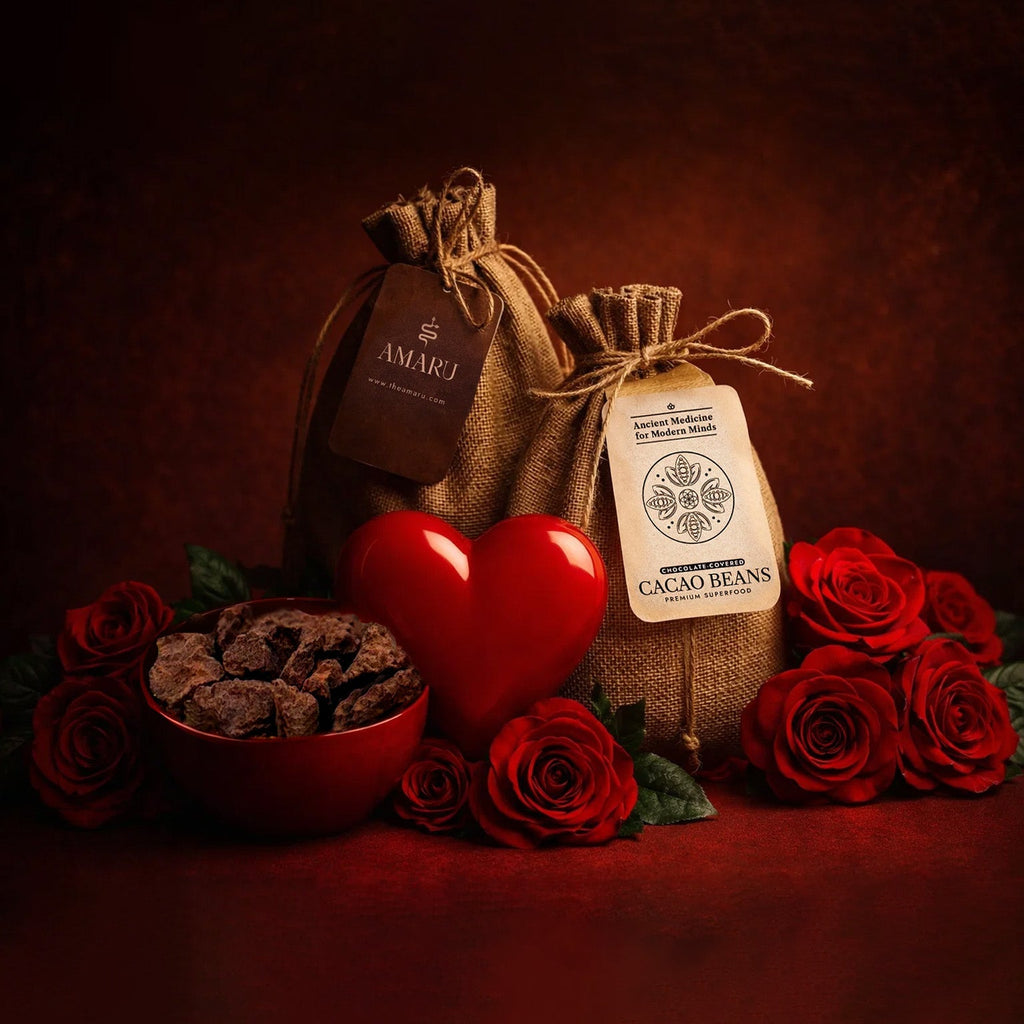
AMARU Ceremonial Cacao

At AMARU, our ceremonial-grade cacao is sourced directly from regions where cacao has been grown, honored, and protected for thousands of years.
We work with cacao that is:
-
not processed
-
ethically sourced
-
stone-ground
-
rich in natural theobromine and magnesium
-
deeply rooted in ancestral cacao traditions
This is cacao as it was meant to be — whole, grounding, and alive with intention.
Each block carries the quiet wisdom of its origins, inviting you to create your own ritual — whether in meditation, creativity, movement, or stillness.
Related post
14
Feb
11
Dec
11
Dec


